From the dawn of mankind the use and advancement of tools and technology to better the standard of living for all humans has been growing. This blog will examine past and current situations where the machines we have created have either helped or hindered people and the way that they live.
Search This Blog
Showing posts with label Robotic Outsourcing. Show all posts
Showing posts with label Robotic Outsourcing. Show all posts
In the original Lost in Space, the robot would
scream “Danger Will Robinson!” when trouble abounded close to Will, the young
boy of the crew. But what if the robot was yelling at a different kind of
futuristic danger? A future where manufacturing world would need no human
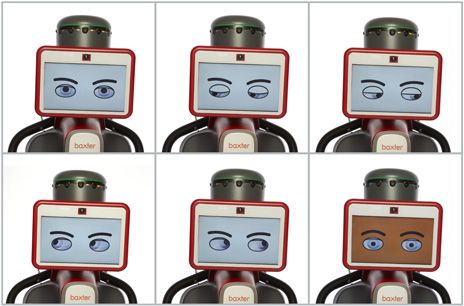
manufacturers? Introducing from Rethink Robotics, a robot manufacturing that
has created a human like substitute, Baxter.
This new robot threat is just like Terminator,
only instead of eliminating the human race it is eliminating jobs. Baxter is
made to increase productivity and make America more competitive with
manufacturing giants like China. The price of this robot will only be 22,000$
American dollars. This cost will far undermine the American worker (your
average American worker will make around that much a year). Baxter is made with
75 percent American parts and is very easy to program. This is said to “unleash
a revolution in manufacturing with a friendly faced factory robot” from IEEE Spectrum article. What? This robot
can not only multitask but expresses emotions. These emotions are programed to
add feedback.
How will this affect the hardworking? When will they create a robot that can do everything a human can do minus the added cost? Danger Will Robinson, your job is not safe!
The year is 1913 and the Ford Motor Company is about to
revolutionize the way manufacturing works. Piece by piece and worker by worker
the Model T was produced in a way that had never been done before. Each
individual on the workroom floor was responsible for assembling a piece of the
Model T as it was pulled by them on a rope and trolley system. The simple
addition of an assembly line eventually would lower the price of the Model T to
a level where the average American consumer could finally purchase a vehicle,
Henry Ford’s dream.
The functionality and ability of an assembly line to cut
production time and cost of goods hasn’t changed very much in the last 100
years. The technology behind it, however, has. The manufacturing process has
started to move in a direction where an assembly line no longer needs to be run
by a human being, who needs to be paid and rested after a work day. Instead the
assembly lines are beginning to be run by robots. These robots can run 24/7,
365 days of the year, don’t need to get paid, and can perform the required work
at a much faster pace than even the best trained human could.
This is a good thing, right? An increase in production time
and a decrease in salaries results in a cheaper good for people to buy and a
potential for financial growth within the company using the assembly. The
downside to it all is the loss of human jobs. Many people depend on
manufacturing assembly line jobs to earn a living and care for their families.
If these jobs are taken away, will that hurt a society’s economy, standard of
living or lifestyle. What do you think? Is it more important to maximized
efficiency in production or ensure the wellbeing of the human race? Is there a
healthy balance?